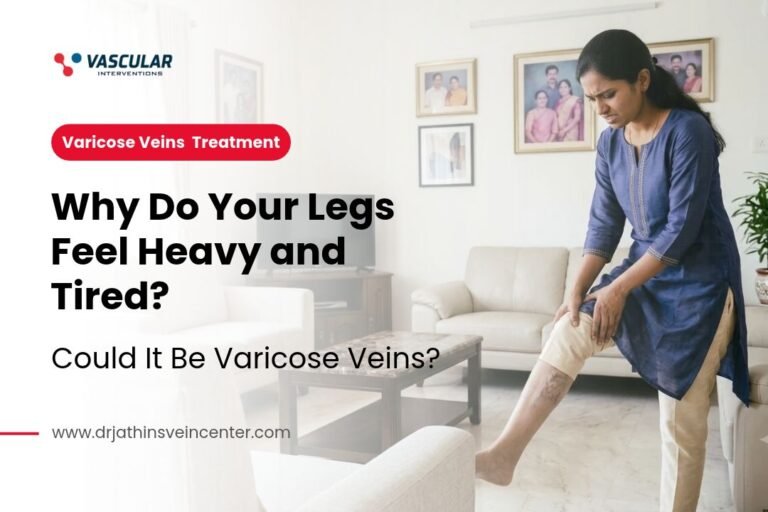

Do your legs feel heavy at the end of the day?
Do they get tired after standing or sitting for a long time?
Do you sometimes feel pain, swelling or discomfort in your legs?
Many people face these problems. Most of the time, it is just normal tiredness.
But sometimes, heavy legs can be a sign of varicose veins.
In this article, we will look at the common reasons for heavy legs. We will also learn about the symptoms of varicose veins, who is at risk, and when you should see a vascular surgeon nearby.
What Are the Common Reasons for Heavy and Tired Legs?
Heavy legs do not always mean varicose veins. There are many other reasons.
- Standing or sitting for long hours: Staying in one position for too long slows down blood flow in the legs. This can make them feel heavy.
- Lack of physical activity: When you do not move much, leg muscles and veins do not get the help they need to push blood upward.
- Muscle tiredness: Too much walking, exercise or work can leave your leg muscles tired and sore.
- Extra body weight: Extra weight puts more pressure on your legs and veins.
- Poor blood circulation: If blood does not flow well, your legs may feel tired, heavy or swollen.
- Vein problems: Weak or damaged veins cannot move blood properly. This is one of the causes doctors look at when heaviness keeps coming back.
Can Varicose Veins Make Your Legs Feel Heavy?
Yes, they can. Varicose veins are veins that become enlarged and twisted. They are most often seen in the legs.
This is because your legs have to push blood upward against gravity, all the way to the heart.
Inside your veins, there are small valves. These valves open to let blood move up, and close to stop it from flowing back down.
When these valves become weak or stop working properly, blood can collect in the vein. Over time, the vein may become swollen and twisted.
Some people with varicose veins feel heaviness, aching pain and swelling in their legs.
Common Symptoms of Varicose Veins You Should Know
Varicose veins can cause different symptoms. Some common symptoms of varicose veins includes:
- Heavy Legs: Your legs may feel heavy or full, especially after standing for a long time.
- Leg Pain: You may feel aching, soreness or discomfort in your legs.
- Swollen Ankles: Your ankles and feet may become swollen, especially towards the end of the day.
- Visible Veins: Blue or purple veins may appear enlarged or twisted under your skin.
- Itching: You may experience itching around the affected veins.
- Muscle Cramps: Some people experience leg cramps, especially at night.
- Skin Changes: The skin around your ankles may become darker or change colour.
These symptoms may become worse after standing or sitting for long periods. Some people feel better after resting or raising their legs.
Who Is More Likely to Develop Varicose Veins?
Some things can increase the chance of getting varicose veins:
- Family history: If someone in your family has varicose veins, you may be more likely to get them.
- Age: As we get older, the valves in our veins can become weaker.
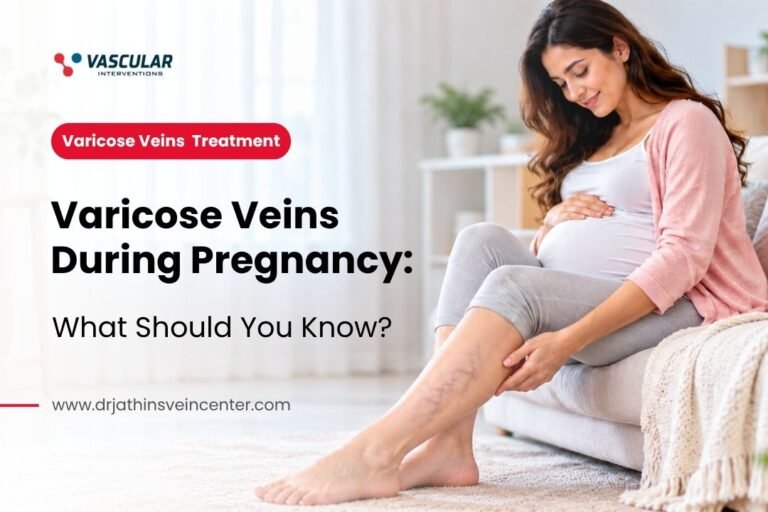
- Pregnancy: During pregnancy, the amount of blood in the body increases. This can raise the pressure in the leg veins.
- Long working hours: Standing or sitting for many hours can affect blood flow.
- Extra body weight: More weight puts more pressure on the veins.
- Less movement: When you are not active, blood flow in the legs can slow down.
How Can You Reduce Leg Heaviness and Discomfort?
Some simple habits can help you feel better:
- Do not sit or stand in one position for a long time.
- Take short walking breaks during the day.
- Keep your legs raised when you rest.
- Try to keep a healthy body weight.
- Stay active with light exercise like walking.
- Ask your doctor if compression stockings are right for you.
Please remember: these steps can help you manage the symptoms. But they may not remove varicose veins that are already there.
When Should You Consult a Varicose Veins Specialist?
It is a good idea to see a doctor if you have:
- Heavy legs or leg pain that keeps coming back
- Swelling in your feet and ankles again and again
- Veins that look enlarged or twisted
- Itching or change in skin colour
- Sores on the leg that are not healing
- Bleeding from a varicose vein
The doctor will check your legs and may do a Duplex Ultrasound. This is a simple scan that shows how blood is flowing in your veins.
Emergency warning: If only one leg suddenly becomes swollen, painful, warm or red, get medical help urgently.
If you also have chest pain or trouble breathing, go for emergency care right away.
These can be warning signs of a blood clot (DVT) or a clot in the lungs.
What Treatment Options Are Available for Varicose Veins?
Today, there are several treatments that do not need traditional open surgery. These are done through very small cuts or injections.
- Laser Treatment (EVLT): A thin laser fibre is placed inside the affected vein. The laser heat closes the vein, and blood moves through healthier veins instead.
- Radiofrequency Ablation (RFA): A small tube is placed inside the vein. It uses heat energy to close the vein.
- VenaSeal Treatment: A special medical glue is used to close the affected vein.
- Sclerotherapy: A special liquid is injected into selected abnormal veins to close them.
The right treatment depends on your vein condition, your symptoms and your ultrasound results.
A vascular vein specialist can help decide which option may suit you. Not every patient needs the same treatment.
Consult a Varicose Veins Specialist
If you have heavy legs, leg pain or visible veins that do not go away, it is a good idea to get a proper check-up.
Dr. Jathin is a Vascular and Interventional Radiologist in Mumbai. He diagnoses and treats varicose veins using modern, minimally invasive options such as laser treatment, radiofrequency ablation, VenaSeal and sclerotherapy.
If you are looking for a varicose veins specialist in Mumbai, you can meet him for a check-up and understand your treatment options.
Conclusion
If your legs feel heavy again and again, do not ignore it. Varicose veins can be one possible reason.
A proper check-up helps you find the real cause, and early consultation helps you understand the treatment options that may suit you.