

Varicose veins can be easy to notice, especially when enlarged or twisted veins appear on the legs. But what you see on the skin does not always tell the complete story. Some people have prominent veins with few symptoms, while others may experience aching, heaviness, swelling, itching, cramps, or changes in the skin.
For patients considering Varicose Veins treatment in Mumbai, understanding how a doctor evaluates the condition can make the consultation less stressful. A proper evaluation helps determine whether the visible veins are associated with an underlying problem with blood flow and whether treatment is actually needed.
Understanding a varicose veins diagnosis can help you know what to expect during your appointment. The process usually involves discussing your symptoms, examining your legs, and, when appropriate, using an ultrasound to assess how blood is moving through the veins.
What Is Involved in Diagnosing Varicose Veins?
A diagnosis is not based only on whether a vein looks enlarged. Your doctor considers your symptoms, medical history, physical examination findings, and the condition of the veins underneath the skin.
The evaluation may involve:
- Discussing your symptoms and medical history
- Examining your legs
- Performing a duplex ultrasound when needed
- Assessing blood flow and vein valve function
- Using the findings to develop an appropriate treatment plan
This approach allows the doctor to understand both what is visible and what may be happening inside the veins.
When Should You See a Doctor for Varicose Veins?
Not every visible vein requires medical treatment. However, symptoms or changes in the legs are worth discussing with a doctor.
Symptoms That May Need Evaluation
You may benefit from an evaluation if you experience:
- Aching or pain in the legs
- A feeling of heaviness or tiredness
- Swelling around the ankles or lower legs
- Burning, itching, or throbbing
- Leg cramps, particularly at night
- Skin discoloration
- Enlarged, twisted, or bulging veins
Some patients notice that their symptoms become worse after standing for several hours and improve when they rest or elevate their legs. Sharing this pattern with your doctor can be useful during the consultation.
Signs You Should Not Ignore
Certain changes deserve prompt medical assessment. These include sudden swelling, significant or new pain, skin ulcers, bleeding from a varicose vein, or rapid changes in the appearance of the leg.
These symptoms do not necessarily mean there is a serious complication, but they should not simply be dismissed as a cosmetic vein problem.
Step 1: Your Medical History and Symptoms
The first part of the consultation is usually a conversation. Your doctor will want to understand what you are experiencing and how the symptoms affect your daily routine.
Questions Your Doctor May Ask
You may be asked:
- When did you first notice the veins?
- Do your legs ache or feel heavy?
- Do your symptoms become worse after standing?
- Does swelling develop during the day?
- Is there a family history of varicose veins?
- Have you previously had blood clots or vein treatment?
- Does your work involve prolonged sitting or standing?
Your doctor may also ask about previous procedures, relevant medical conditions, medications, and any changes you have noticed over time.
A common concern patients raise is whether visible veins automatically mean they need treatment. The answer often depends on symptoms and what the examination and ultrasound show.
Step 2: Physical Examination of Your Legs
After discussing your symptoms, the doctor examines your legs. The examination provides important information about the visible signs of vein disease.
What Is Checked?
Your doctor may look for:
- Varicose veins
- Spider veins
- Leg swelling
- Skin changes
- Discoloration
- Areas of tenderness
- Other signs associated with chronic venous disease
The doctor may examine both legs even if you have noticed a problem on only one side. Comparing the legs can provide useful information about swelling, skin changes, and the distribution of visible veins.
Why You May Be Examined While Standing
You may be asked to stand during part of the examination. When you are upright, gravity increases the amount of blood in the leg veins. This can make certain abnormal veins more visible and easier for the doctor to assess.
The examination is therefore not simply about looking at the veins. It helps the doctor understand their distribution and identify signs that may need further evaluation.
Step 3: Duplex Ultrasound for Varicose Veins
A duplex ultrasound is an important part of vein evaluation when the doctor needs more information about what is happening beneath the skin.
What Is a Duplex Ultrasound?
A duplex ultrasound uses sound waves to create images of the veins while also assessing blood flow through them.
The examination is generally:
- Non-invasive
- Painless
- Performed externally on the skin
- Free from radiation
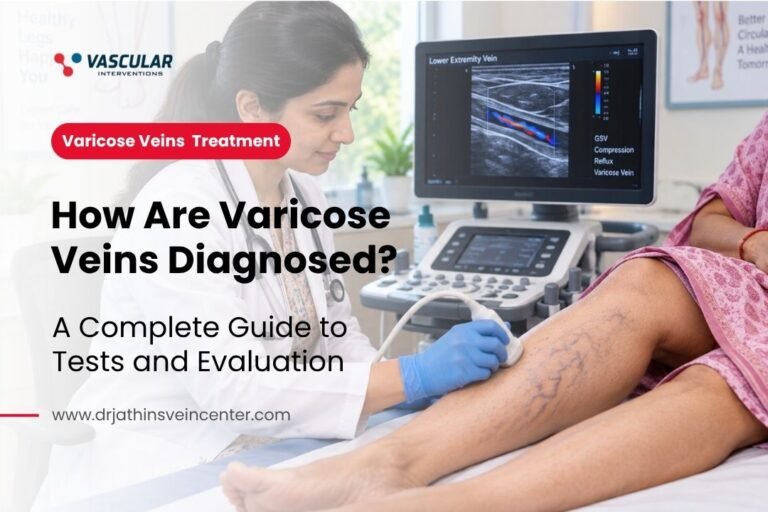
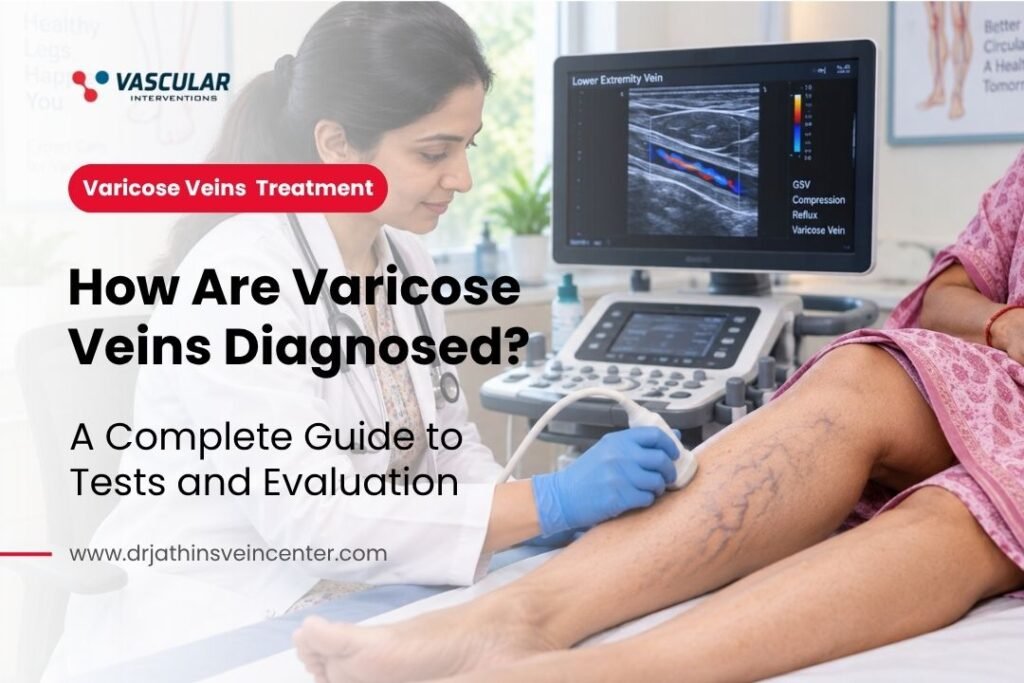
During the scan, an ultrasound probe is moved over the skin of the leg. The examination can assess veins in different areas and provide information about the direction and movement of blood.
What Does a Varicose Vein Ultrasound Show?
An ultrasound can help evaluate:
- The direction of blood flow
- Vein valve function
- Venous reflux
- Which veins are affected
- The source of visible varicose veins
- The condition of deeper veins
A duplex ultrasound for varicose veins helps identify the underlying cause rather than simply assessing what is visible on the surface.
This distinction matters because the vein that looks abnormal may not be the original source of the problem. Ultrasound can help your doctor trace the pattern of abnormal blood flow and understand which veins may need attention.
What Is Venous Reflux?
Venous reflux occurs when valves inside a vein do not close properly, allowing blood to flow backward and pool in the vein.
Normally, valves in the leg veins help blood move upward toward the heart. When these valves do not work efficiently, blood can move in the wrong direction and increase pressure within the veins.
Over time, this may contribute to:
- Enlarged or twisted veins
- A feeling of pressure or heaviness in the legs
- Aching or discomfort
- Swelling
- Progressive vein-related changes
Not everyone with visible varicose veins experiences the same degree of reflux. This is one reason an appropriate evaluation is useful before deciding on treatment.
Step 4: Evaluating the Severity of Vein Disease
Diagnosis involves more than confirming that varicose veins are present. Your doctor also considers how extensive the problem is and whether it is affecting your comfort, skin, or daily activities.
The evaluation may consider:
- Which veins are involved
- The severity and duration of symptoms
- Swelling
- Skin changes
- Possible complications
- The effect of symptoms on everyday activities
Why Does Severity Matter?
The findings help your doctor determine the most appropriate next step.
Depending on the individual situation, this may include:
- Lifestyle measures
- Compression therapy
- Monitoring the condition
- A minimally invasive vein procedure
- Further evaluation if symptoms suggest another problem
Treatment should be based on the patient’s individual findings rather than simply the appearance of a vein.
Are Other Tests Needed for Varicose Veins?
For many patients, the medical history, physical examination, and duplex ultrasound provide the information needed for evaluation.
Additional testing is not automatically necessary. It may be considered when symptoms or medical history suggest another circulation-related condition or when the doctor needs information that cannot be obtained from the initial assessment.
Your doctor can explain why a particular test is being recommended and how the result may affect your care.
Can Varicose Veins Be Diagnosed Without an Ultrasound?
Visible varicose veins can often be identified during a physical examination. However, looking at the legs alone may not reveal the underlying cause of the vein problem.
An ultrasound can provide additional information about blood flow, valve function, reflux, and deeper veins. This can be particularly useful when treatment is being considered.
In other words, a physical examination may identify the visible problem, while ultrasound can help explain what is happening beneath the surface.
What Happens After the Varicose Veins Diagnosis?
Once your evaluation is complete, your doctor can discuss the findings with you and explain whether treatment is necessary.
The discussion may cover:
- Whether your symptoms require treatment
- Which vein or veins are contributing to the problem
- Which treatment options may be suitable
- What you can expect during recovery
- Potential benefits and risks of treatment
Treatment options can vary depending on the findings. Conservative management and compression may be appropriate for some patients, while others may benefit from minimally invasive procedures such as EVLT or radiofrequency ablation.
The goal is not simply to remove a visible vein. The underlying circulation problem should be understood so that treatment can be planned appropriately.
Preparing for Your Varicose Vein Consultation
A little preparation can make your appointment more productive.
Before your consultation, consider:
- Making a note of when your symptoms occur
- Tracking whether symptoms become worse after standing or sitting
- Recording when swelling usually appears
- Bringing information about previous vein treatments
- Making a list of your current medications
- Sharing relevant medical history
- Asking whether a duplex ultrasound will be performed
You may also want to write down your questions before the appointment. Patients sometimes remember important concerns only after they leave the clinic.
Varicose Veins Diagnosis in Mumbai: What to Expect
If you are looking for a Varicose veins Doctor in Mumbai, the evaluation generally begins with a detailed discussion of your symptoms and medical history, followed by an examination of your legs.
Depending on your symptoms and examination findings, a duplex ultrasound may be recommended to assess blood flow and vein function. The results can then be discussed with you so that you understand the condition and the available options.
A personalised evaluation is useful because varicose veins can vary significantly from one patient to another. The appropriate approach depends on your symptoms, vein findings, and overall medical situation.
Key Takeaways
- A proper diagnosis looks beyond visible veins.
- Your symptoms and medical history are important parts of the evaluation.
- A physical examination helps identify visible signs and changes in the legs.
- Duplex ultrasound can assess blood flow, valve function, reflux, and affected veins.
- The findings help your doctor determine whether treatment is needed and which approach may be appropriate.
- If you have new or concerning symptoms, seek medical evaluation rather than assuming they are simply cosmetic.
Frequently Asked Questions
How are varicose veins diagnosed?
Varicose veins are usually evaluated through a combination of medical history, symptom assessment, physical examination, and, when appropriate, duplex ultrasound. The doctor uses these findings to understand both the visible veins and the underlying blood flow.
Is a duplex ultrasound necessary for varicose veins?
Not every patient needs the same evaluation. A duplex ultrasound may be recommended when the doctor needs to assess blood flow, valve function, reflux, deeper veins, or the source of visible varicose veins.
Is a varicose vein ultrasound painful?
A duplex ultrasound is generally painless. An ultrasound probe is moved over the skin to create images of the veins and assess blood flow.
How long does a duplex ultrasound take?
The duration can vary depending on the areas being examined and the complexity of the vein assessment. Your clinic can provide an estimate based on the examination being performed.
Can varicose veins be diagnosed just by looking at the legs?
Visible varicose veins can often be recognised during a physical examination. However, an ultrasound may be needed to understand the underlying blood flow and determine whether abnormal vein valves or reflux are contributing to the problem.
What happens after a varicose veins diagnosis?
After the evaluation, your doctor will discuss the findings and whether treatment is necessary. Depending on your condition, the plan may involve observation, lifestyle measures, compression therapy, or a minimally invasive treatment.