
You just scheduled your EVLT. Or maybe you are still thinking about it, and one of the things holding you back is not knowing what comes after.
That is completely understandable.
Most people spend a lot of time researching the procedure itself but struggle to find clear, honest information about the recovery.
- What does the first day feel like?
- When can you go back to work?
- Is that bruising on your leg normal?
- What about the tight, pulling sensation that shows up a week later?
These are real questions, and they deserve real answers.
EVLT is one of the most minimally invasive ways to treat varicose veins today. Most patients walk out of the clinic the same day and are back to their routine within 24 to 48 hours.
But quick recovery does not mean there is nothing to know.
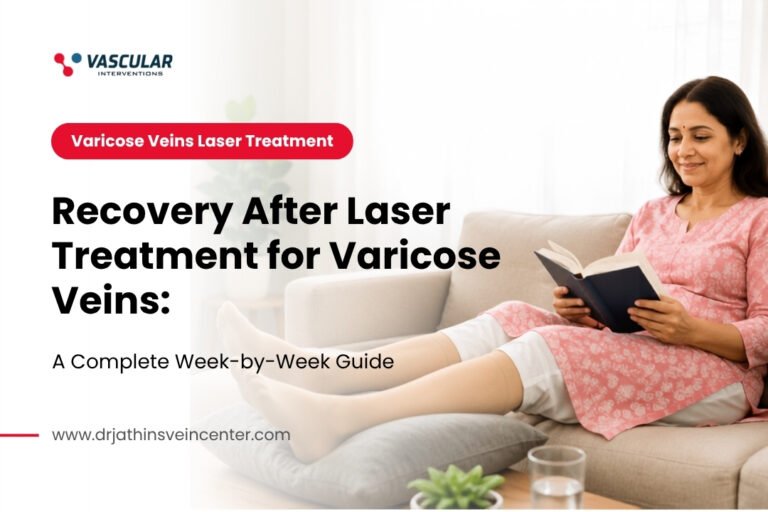
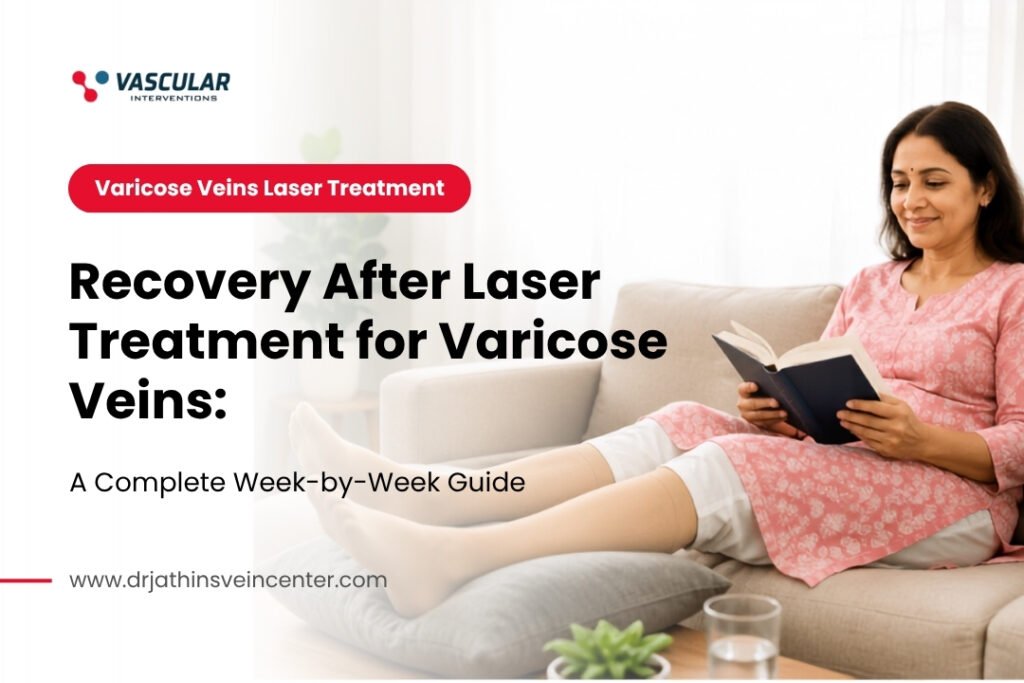
This guide covers everything, from the first few hours after your laser treatment for varicose veins, through the weeks that follow, right up to the six-month mark when most patients see their final results.
No medical jargon, no vague reassurances. Just a clear picture of what to expect, so you can go into your EVLT treatment in Mumbai fully prepared.
What Happens to Your Vein After EVLT?
Understanding what your body is actually doing after the procedure makes the entire recovery a lot less confusing.
During the procedure, a thin laser fibre is inserted into the affected vein through a tiny puncture in the skin. The laser delivers heat along the vein wall, causing it to collapse and seal shut. Blood then reroutes naturally through the healthier veins in your leg.
The whole thing takes about 45 to 60 minutes, under local anaesthesia, and you go home the same day.
After the procedure, here is what your body does:
The sealed vein does not disappear immediately. Over the following weeks and months, your body gradually breaks it down and absorbs it. This is completely natural, but it explains a lot of what you feel during recovery:
- The tenderness and firmness along the treated area? Your body is actively working on that vein.
- The bruising and discolouration? That is localised inflammation from the laser heat. Normal and expected.
- The tight, pulling sensation around week one or two? The vein is shrinking as it gets absorbed.
By the three to six month mark, most of the vein has been fully absorbed. And by that point, the symptoms that brought you in, the aching, the heaviness, the visible bulging, are significantly reduced or gone.
Your leg is healing from the inside out. The recovery timeline makes a lot more sense when you keep that in mind.
The First 72 Hours: What to Expect Day by Day
The first three days after EVLT are usually the easiest part of recovery. Here is exactly what most patients experience.
Day 1: Right After the Procedure
You will walk out of the clinic on your own. No hospital stay, no bed rest, no one carrying you out.
In fact, walking is encouraged immediately after EVLT. It gets the blood moving and supports healing. Most patients drive themselves home or take a cab with no issues.
What you will notice:
- Mild soreness or achiness along the treated leg
- Some tightness where the vein was treated
- Compression stocking on the leg, which you will need to keep on
What to do:
- Walk for 15 to 20 minutes, a couple of times through the day
- Keep the leg elevated when sitting or lying down
- Avoid soaking the leg in water for the first 48 hours
Day 2: Back to Light Activity
Most patients feel close to normal by day two. The soreness is still there but manageable. Over the counter pain relief is usually all that is needed, if anything at all.
You can move around the house comfortably, do light work, and sit at a desk without much trouble. Just avoid anything that puts strain on the legs.
Day 3: Back to Your Routine
By day three, the majority of patients are back to desk work, light errands, and their regular daily routine.
If your job involves sitting at a computer, attending meetings, or light walking, you are very likely good to go by day three. Jobs that involve long hours of standing, heavy lifting, or physical labour may need a few more days.
One thing to keep in mind: fatigue in the treated leg is common in the first few days. Do not push through it. Rest when you need to.
Week 1 to Week 2: What’s Normal, What’s Not
By the end of the first week, most patients feel significantly better.
But this is also the phase where people start noticing things that look a little concerning, and end up Googling at midnight wondering if something has gone wrong.
Here is what is completely normal during this phase, and what actually needs attention.
What to Expect
- Bruising along the treated area. It can look quite dramatic, especially in the first week. It will fade on its own.
- A firm, cord-like feeling under the skin. This is the treated vein hardening as it gets absorbed. It is not a clot. It is part of normal healing.
- Skin discolouration. Some patients notice a brownish or reddish tint along the vein path. This fades over weeks.
- Tightness or a pulling sensation. Very common, especially when walking or stretching. It eases up by week two for most people.
- Mild swelling in the lower leg or ankle. Usually worse at the end of the day. Keeping the leg elevated helps.
Compression Stockings: Keep Wearing Them
Your surgeon will give you specific instructions, but most patients are advised to wear compression stockings continuously for the first week, and then during waking hours through week two.
Do not skip this. The stockings support the treated vein, reduce swelling, and significantly improve comfort during this phase.
Activity During Weeks 1 and 2
Walking daily is not just allowed, it is important. Aim for at least two short walks a day.
Avoid the gym, running, cycling, or any strenuous exercise.
Avoid long periods of sitting or standing without moving. If you are at a desk all day, get up and walk around every hour.
Avoid hot baths, saunas, or steam rooms. Heat increases inflammation and swelling.
When to Call Your Doctor
Most symptoms during this phase are normal. But contact Dr. Jathin’s clinic if you notice any of the following:
- Sudden, severe pain in the leg that is getting worse, not better
- Significant redness, warmth, or swelling that appears rapidly
- Fever above 38 degrees Celsius
- Numbness or tingling that was not there before
- Any discharge or unusual changes at the puncture site
These are rare, but worth knowing.
Weeks 3 to 4: Returning to Full Activity
By week three, most patients feel like themselves again. The bruising has faded, the tightness has eased up, and the leg feels a lot more normal to move around in.
This is the phase where you can start gradually returning to the activities you put on hold.
Exercise and Physical Activity
- Walking and light cardio are completely fine by week three.
- Gym workouts and resistance training can typically resume around weeks three to four, starting light and building up gradually.
- Swimming and hot yoga are generally cleared by week four, but confirm with your surgeon before jumping back in.
- Running can usually resume by the end of week four for most patients.
The key word here is gradual. Do not go from zero to a full workout in one day. Give your leg a chance to tell you what it is ready for.
What the Treated Area Looks Like at This Stage
The vein is still being absorbed by the body at this point, so do not expect everything to look perfect yet.
- The cord-like firmness under the skin will still be there but softer than week one.
- Bruising should be mostly gone or very faint by now.
- Some patients notice small areas of skin discolouration along the vein path. This is normal and continues to fade over the coming months.
Your Follow-Up Ultrasound
Your varicose veins doctor will schedule a follow-up duplex ultrasound scan around this time, typically between weeks two and four after the procedure.
This scan checks two important things:
- That the treated vein has closed properly and is being absorbed as expected.
- That there are no signs of deep vein thrombosis (DVT), which is a rare but possible complication after any vein procedure.
Do not skip this appointment, even if you are feeling completely fine. The ultrasound gives your vascular surgeon in Mumbai a clear picture of how your recovery is progressing on the inside, not just how you feel on the outside.
Months 1 to 6: Long-Term Healing
By the one-month mark, most patients have largely forgotten they had a procedure done. The leg feels comfortable, activity is back to normal, and the recovery is essentially behind you.
But healing is still happening under the surface, and this phase is worth understanding.
What Your Body Is Still Doing
The treated vein continues to be broken down and absorbed by the body throughout this period. This is a slow, gradual process and it is completely normal for the vein to still be visible or palpable in the early months.
Here is a rough picture of what most patients experience:
- Month 1 to 2: The treated vein is still partially visible. Some residual discolouration or firmness may remain. Energy levels and leg comfort are mostly back to normal.
- Month 3 to 4: The vein becomes significantly less visible. Most of the discolouration fades. The leg starts looking noticeably cleaner.
- Month 5 to 6: For most patients, the treated vein has been fully absorbed by this point. The skin appearance improves considerably and the symptoms that led you to seek treatment are largely gone.
What the Results Actually Look Like
EVLT has a closure rate of over 95% in properly selected patients. What this means in practical terms is that the treated vein stays closed and absorbed, and does not reopen or refill with blood.
However, EVLT treats the specific vein that was causing the problem. It does not prevent new varicose veins from developing elsewhere in the leg, particularly if the underlying tendency runs in your family or if lifestyle factors like prolonged standing are still present.
Protecting Your Results Long Term
A few habits go a long way in keeping your legs healthy after EVLT:
- Keep moving. Regular walking is one of the best things you can do for vein health.
- Maintain a healthy weight. Extra weight puts pressure on leg veins over time.
- Avoid prolonged standing or sitting. If your job requires it, compression stockings during work hours make a real difference.
- Stay hydrated. Good circulation depends on it.
- Wear compression stockings during long flights or extended travel, even after full recovery.
These are not complicated changes. But they significantly reduce the chances of new veins developing and keep the results of your procedure lasting as long as possible.
Things to Avoid During Recovery: A Practical Do’s and Don’ts List
A lot of recovery comes down to a few simple decisions each day. Here is a clear, no-fuss reference you can come back to.
Do’s
- Walk every day, starting from day one. Short, gentle walks are ideal in the first week.
- Keep the leg elevated when resting, especially in the first two weeks.
- Wear your compression stockings as instructed by your varicose veins doctor. Do not skip days.
- Stay hydrated. Drink enough water through the day.
- Sleep with a pillow under the treated leg for the first week or two.
- Attend your follow-up ultrasound appointment, even if you feel completely fine.
- Take over the counter pain relief if needed. Ibuprofen also helps with inflammation.
Don’ts
- Do not sit or stand in one position for long stretches. Move around every hour.
- Do not take hot baths, use a sauna, or spend time in a steam room for at least two weeks.
- Do not go swimming until your vascular surgeon clears you, typically around week three to four.
- Do not do strenuous exercise, heavy lifting, or high intensity workouts in the first two weeks.
- Do not expose the treated area to direct sunlight for extended periods during the first few weeks. It can worsen skin discolouration.
- Do not ignore pain that is getting worse instead of better. Call the clinic.
- Do not stop wearing compression stockings early because the leg feels fine. Finish the recommended duration.
A Quick Note on Air Travel
If you have a flight coming up shortly after your procedure, speak to your varicose veins specialist before you travel. Long haul flights involve extended sitting and reduced circulation, which is not ideal in the early recovery phase. Short domestic flights are usually fine after the first week, but get the go ahead from your surgeon first.
A Note for Mumbai Patients: Recovery in a Busy City
Recovering from EVLT anywhere is straightforward. But recovering in Mumbai after your varicose veins treatment comes with its own set of practical considerations that are worth addressing honestly.
The Heat and Humidity
Mumbai’s climate is not exactly forgiving, especially during the monsoon and summer months. Heat causes veins to dilate and can increase swelling in the legs, which is the last thing you want during recovery.
A few things that help:
- Stay indoors or in air conditioned spaces as much as possible in the first week.
- If you need to step out, do it during cooler parts of the day, early morning or evening.
- Wear loose, breathable clothing over your compression stocking. Cotton works best.
- Avoid standing in the sun for extended periods in the first two weeks.
Compression Stockings in the Mumbai Heat
This is the complaint we hear most often. Wearing a compression stocking in 35 degree heat and 80% humidity is genuinely uncomfortable. But it is non-negotiable in the first two weeks.
A few tips to make it more manageable:
- Put the stocking on first thing in the morning, before the heat of the day sets in and before any swelling starts.
- Moisture wicking, open toe stockings are more comfortable in hot weather. Ask the clinic about options.
- Keep the leg elevated and in a cool room when you are at home and can take a break.
Getting Around the City
Mumbai’s daily commute is not gentle. Here is a realistic breakdown by commute type:
- Car or cab: Fine from day two or three, as long as you are not driving long distances continuously. Stop and walk around if the ride is longer than 30 to 40 minutes.
- Auto rickshaw: Manageable from day three or four. The vibration and jostling is not ideal in the first couple of days.
- Local train: Avoid for at least the first week. The standing, crowding, and unpredictable movement is too much pressure on the leg too soon. Week two onwards is more realistic for most patients.
Desk Jobs vs. Field Jobs
If you work at a desk, you can likely return by day two or three. Just make sure you are getting up and walking around regularly through the day.
If your job involves standing for long hours, fieldwork, or physical labour, plan for at least five to seven days off, and speak to your doctor about a specific return to work timeline based on your procedure.
Recovery after varicose veins treatment in Mumbai is absolutely doable. A little planning around the city’s realities just makes it smoother.
Ready to Take the Next Step?
EVLT is one of the most effective varicose veins treatments available today, and the recovery is genuinely manageable for most people.
A few days of taking it easy, some discipline with compression stockings, and a couple of short walks each day is really all it takes.
Most patients look back and say the procedure was far less daunting than they expected.
The bigger challenge is usually the weeks of putting it off before booking the appointment.
If you have been living with the pain, heaviness, or appearance of varicose veins and are considering laser treatment for varicose veins in Mumbai, the best next step is a consultation with Dr. Jathin. A duplex ultrasound scan and a proper assessment will give you a clear picture of your veins and the right treatment plan for your specific situation.
Book your consultation at Dr. Jathin’s Vascular and Varicose Vein Center today.
Frequently Asked Questions
How long does EVLT recovery take?
Most patients are back to their daily routine within 24 to 48 hours. Full recovery, meaning the treated vein is completely absorbed and final results are visible, takes around three to six months. But this happens in the background. You will feel normal well before that.
Is EVLT painful?
The procedure is done under local anaesthesia, so you will not feel pain during the treatment. Afterwards, some soreness, tightness, and tenderness in the treated leg is normal for the first few days. Most patients manage this comfortably with basic over the counter pain relief.
When can I go back to work after EVLT?
If you have a desk job, most patients return to work within one to three days. Jobs that involve prolonged standing, physical labour, or fieldwork may require five to seven days off. Speak to Dr. Jathin for a personalised timeline based on your procedure.
Will the varicose veins come back after EVLT?
EVLT has a closure rate of over 95%, meaning the treated vein stays closed permanently in the vast majority of cases. However, new varicose veins can develop over time, particularly if there is a family history or if lifestyle factors like prolonged standing are still present. Regular follow ups and a few simple habits go a long way in preventing this.
Do I really need to wear compression stockings after EVLT?
Yes. Compression stockings are not optional in the first two weeks. They support the treated vein, reduce swelling, and make recovery significantly more comfortable. Skipping them can slow healing and increase discomfort.
How soon will I see results after EVLT?
You will notice an improvement in symptoms like aching and heaviness quite quickly, often within the first week. Visible changes in the appearance of the vein take longer. Most patients see a significant difference by month three, with final results visible around the six month mark.